TL;DR
THCA is the raw, non-psychoactive precursor to THC found in hemp flower. When heated (smoked, vaped, or cooked), it converts to THC through decarboxylation.
THCA, or tetrahydrocannabinolic acid, is the naturally occurring precursor to THC found in raw cannabis and hemp flower. If you've seen the term on a lab report, heard it mentioned alongside hemp-derived products, or wondered why certain hemp flower produces effects similar to cannabis from a dispensary, THCA is the answer. In this complete guide, we'll break down exactly what THCA is, how it works in your body, how it differs from THC, its legal status under the 2018 Farm Bill, and why THCA flower has become one of the fastest-growing product categories in the legal hemp market.
Whether you're brand new to cannabinoids or a seasoned consumer looking for a deeper understanding of the science, this guide covers everything you need to know about the THCA cannabinoid, from the chemistry to the real-world experience.
What Does THCA Stand For?
THCA stands for tetrahydrocannabinolic acid. It is one of more than 100 cannabinoids naturally produced by the cannabis plant. In the simplest terms, THCA is the raw, acidic form of THC (Delta-9-tetrahydrocannabinol), the compound most people associate with the psychoactive effects of cannabis.
Every cannabis and hemp plant produces THCA as it grows. The plant does not actually produce THC directly. Instead, it synthesizes THCA in its trichomes, the tiny, crystal-like glands that coat the surface of mature flower buds. THCA only converts into THC when it is exposed to heat, a process called decarboxylation (more on that below).
This distinction is critical, because it's the basis for how THCA flower remains federally legal while still delivering a familiar cannabis experience when smoked or vaped.
How Is THCA Different From THC?
The difference between THCA and THC comes down to one thing: a carboxyl group. THCA has an extra carboxylic acid group (-COOH) attached to its molecular structure. This extra group changes the shape of the molecule just enough that it cannot effectively bind to the CB1 receptors in your brain, the receptors responsible for producing a psychoactive high.
Here's how THCA and THC compare across the most important factors:
Chemical structure. THCA and THC share almost the same molecular formula, but THCA's additional carboxyl group makes it a larger molecule. When heat removes that group (decarboxylation), THCA becomes Delta-9 THC.
Psychoactive effects. THCA in its raw form is non-psychoactive. THC is psychoactive. This means eating raw THCA flower or using it in a cold preparation will not produce a high. However, the moment you apply heat, by smoking, vaping, or cooking, THCA rapidly converts into THC and produces the effects commonly associated with cannabis.
Legal classification. Under federal law, Delta-9 THC above 0.3% by dry weight makes a cannabis product illegal. THCA is a separate cannabinoid and is not counted under that 0.3% limit in current testing protocols used for Farm Bill compliance. This is why hemp flower can be very high in THCA (20-35%) and still be considered legal hemp. We explore this topic in detail in our THCA vs THC comparison guide.
Drug testing. Despite being a different cannabinoid in its raw form, THCA converts to THC when heated. Standard drug tests detect THC metabolites, not THCA specifically. This means consuming THCA flower by smoking or vaping can absolutely result in a positive drug test. If you are subject to workplace or legal drug testing, this is an important consideration.
Does THCA Get You High?
This is the most common question people ask about THCA, and the answer depends entirely on how you consume it.
In its raw form, no. If you were to eat raw THCA flower, juice it, or use it in a cold extraction, you would not experience psychoactive effects. The THCA molecule cannot effectively activate the CB1 receptors in your endocannabinoid system when the carboxyl group is still attached.
When heated, yes. The moment THCA is exposed to heat through smoking, vaping, or cooking, it rapidly converts into Delta-9 THC through decarboxylation. At that point, it produces the full range of effects associated with THC, including euphoria, relaxation, altered sensory perception, increased appetite, and potential sedation depending on the strain and dosage.
This is exactly why premium THCA flower has become so popular. When you smoke or vape high-THCA hemp flower, the experience is virtually indistinguishable from traditional cannabis purchased at a licensed dispensary. The difference is not in the effects, it's in the legal classification of the plant before heat is applied.
The specific effects you experience also depend on the strain's terpene profile and whether it's an indica, sativa, or hybrid. Indica-dominant strains tend to produce relaxing, body-heavy effects, while sativas lean toward energizing and cerebral. The Haze Connect carries a curated selection of all three types, each third-party lab tested and verified for potency.
How THCA Becomes THC: Decarboxylation Explained
Decarboxylation is the chemical reaction that converts THCA into THC. The term sounds complex, but the process is simple: apply heat, and the carboxyl group (-COOH) detaches from the THCA molecule as carbon dioxide (CO2), leaving behind Delta-9 THC.
This happens naturally in several situations:
Smoking. When you light a joint, bowl, or THCA pre-roll, the combustion temperature (over 400 F) causes near-instant decarboxylation. The THCA in the flower converts to THC as you inhale, delivering effects within seconds.
Vaping. Disposable THCA vapes heat cannabis extract to a lower temperature than combustion (typically 315-440 F), which still triggers decarboxylation while preserving more terpenes and producing smoother vapor.
Cooking. When THCA flower is baked or heated in oil for edible preparation, the oven temperature decarboxylates the THCA over time. This is why cannabis must be heated before being infused into butter or oil for edibles to be effective.
Slow degradation. THCA also converts to THC very slowly at room temperature over extended periods. Aging, exposure to sunlight, and improper storage can gradually decarboxylate small amounts of THCA. This is one reason why proper storage in a cool, dark, airtight container matters for preserving flower quality.
The bottom line: THCA is the starting material. Heat is the catalyst. THC is the result. Understanding how THCA becomes THC is essential to understanding why THCA flower exists in the legal hemp market and why its effects mirror those of traditional cannabis.
THCA Benefits: What the Research Shows
While research on THCA specifically is still in its early stages, preliminary studies and anecdotal evidence suggest that THCA may offer several potential benefits, both in its raw, non-decarboxylated form and after conversion to THC.
Potential anti-inflammatory properties. A 2011 study published in the journal Biological and Pharmaceutical Bulletin found that THCA demonstrated anti-inflammatory activity by inhibiting COX-1 and COX-2 enzymes, similar to non-steroidal anti-inflammatory drugs (NSAIDs). This suggests raw THCA may have value as a natural anti-inflammatory compound.
Neuroprotective potential. Research published in Phytomedicine (2017) suggested that THCA may have neuroprotective properties, meaning it could potentially help protect brain cells from damage. This area of cannabinoid science is still emerging, but early findings are promising.
Anti-nausea effects. A 2013 study in the British Journal of Pharmacology found that THCA was effective at reducing nausea and vomiting in animal models, potentially even more so than THC in some cases.
Appetite and metabolic effects. Some research suggests that cannabinoids including THCA may interact with the body's endocannabinoid system in ways that influence appetite, metabolism, and energy balance.
It's important to note that most THCA consumers today are using it in its heated form (smoked or vaped), which means they are primarily experiencing the well-documented effects of THC, including relaxation, euphoria, pain relief, sleep support, and appetite stimulation. The unique benefits of raw THCA as a standalone compound are a separate and still-developing area of study.
Potential side effects. When THCA is converted to THC through heat, the side effects are the same as those associated with THC consumption. These can include dry mouth, red eyes, increased heart rate, impaired short-term memory, anxiety or paranoia (especially at high doses or with low tolerance), and drowsiness. Starting with a low dose and choosing the right strain for your experience level can help minimize these effects. If you're new to THCA, a strain in the 20-25% range is a reasonable starting point.
Is THCA Legal?
Yes. With important nuances. The legal status of THCA is tied to the 2018 Farm Bill (the Agriculture Improvement Act of 2018), which federally legalized hemp and all hemp-derived cannabinoids, extracts, and products. Under this law, hemp is defined as cannabis containing less than 0.3% Delta-9 THC by dry weight.
The key detail: the 0.3% limit applies specifically to Delta-9 THC, not to total THC and not to THCA. Because THCA is a chemically distinct cannabinoid from Delta-9 THC, hemp flower can test at 25% THCA or higher while still having less than 0.3% Delta-9 THC, making it compliant with federal law. This is sometimes referred to as the THCA hemp loophole, though it is more accurately described as a straightforward reading of the statute's definitions.
All THCA flower sold by The Haze Connect is tested by independent, third-party labs to verify that Delta-9 THC content falls below the 0.3% federal limit. You can view our Certificates of Analysis (COAs) here.
State-level variations. While THCA flower is federally legal, some states have passed their own laws restricting or banning THCA products, total-THC testing, or hemp-derived cannabinoids more broadly. We ship to most U.S. states, but we recommend checking your state's specific regulations. For a detailed breakdown, see our 2026 state-by-state THCA legality guide.
Upcoming regulatory changes. In November 2025, Congress enacted the Continuing Appropriations Act, which redefines hemp to include total THC (including THCA) beginning December 11, 2026 (moved from November 12 by H.R. 6500, signed September 2, 2026). If this provision takes effect without repeal, it could significantly impact the availability of THCA flower. Congressional efforts (such as H.R. 6209) are currently underway to repeal these provisions, and the outcome remains uncertain. We will continue to update our content and customers as the legal landscape evolves.
THCA Flower: The Most Popular Way to Use THCA
THCA flower is simply hemp-derived cannabis flower that has been bred and cultivated to produce high levels of THCA while keeping Delta-9 THC below 0.3%. It looks, smells, tastes, and smokes exactly like the cannabis you would find at a licensed dispensary. The only difference is its legal classification at the point of sale.
Here's why THCA flower has become the most popular product category in the legal hemp market:
Familiar experience. For consumers who are accustomed to smoking or vaping cannabis, THCA flower delivers an identical experience. The effects, flavor profiles, and quality are on par with dispensary-grade flower, because that's exactly what it is, just grown from hemp-classified genetics.
Strain variety. Just like traditional cannabis, THCA flower is available in indica, sativa, and hybrid varieties. These terpenes influence the flavor and effects of each strain, learn more in our complete terpene guide. At The Haze Connect, we carry strains like Sour Garlic (Indica) for deep relaxation, Limelight (Sativa) for energizing daytime use, and Frozen Biscotti (Hybrid) for a balanced, full-spectrum experience.
Multiple consumption methods. THCA flower can be smoked in a pipe or bong, rolled into a joint, vaped in a dry herb vaporizer, or used to make edibles. For the most convenient ready-to-use option, our whole bud THCA pre-rolls are made from freshly ground premium flower, never trim or shake.
Online availability and legal shipping. Unlike dispensary cannabis, which requires a medical card or state-legal recreational market, THCA flower can be purchased online and shipped to your door legally in most states. This accessibility is a major reason for its rapid growth. The Haze Connect ships discreetly with free shipping on orders over $99.
Quality indicators to look for. When shopping for THCA flower online, prioritize brands that provide third-party lab results (COAs), use indoor-grown flower, publish exact THCA percentages, and offer transparency about their cultivation and sourcing practices. Avoid brands that don't test or that sell outdoor-grown bulk flower repackaged as premium buds.
Ready to try THCA flower? Our beginner's guide to choosing a strain will help you find the right match.
Other Ways to Consume THCA
While flower is the most popular format, THCA is available in several other product types:
THCA pre-rolls. Ready-to-smoke joints filled with ground THCA flower. The Haze Connect's pre-rolls are made from 100% whole bud flower and are available in single 1-gram joints, 5-pack minis, and infused hash hole varieties.
THCA vapes. Disposable THCA vapes use concentrated THCA extract (ideally live resin for full-spectrum terpene preservation) in a pre-filled, rechargeable device. Vaping offers a smoother experience with less odor than smoking flower.
THCA concentrates. Products like live badder, live rosin, and hash offer highly concentrated forms of THCA for dabbing or adding to flower for enhanced potency.
THCA edibles. When THCA flower or concentrate is heated and infused into food, the resulting edible delivers the effects of THC. Hemp-derived Delta 9 gummies offer a pre-dosed, convenient edible option.
Frequently Asked Questions About THCA
Does THCA get you high?
Not in its raw form. THCA is non-psychoactive until it is heated. When you smoke, vape, or cook THCA flower, the heat converts THCA into Delta-9 THC through decarboxylation, which produces the psychoactive effects associated with cannabis. The effects are directly comparable to traditional cannabis from a dispensary.
Is THCA the same as THC?
No. THCA (tetrahydrocannabinolic acid) is the raw, acidic precursor to THC. It has an extra carboxyl group in its molecular structure that prevents it from binding to the CB1 receptors in your brain. When heat removes that group, THCA converts into Delta-9 THC. They are closely related but chemically distinct cannabinoids. Read our full THCA vs THC breakdown for more detail.
Will THCA show up on a drug test?
Yes, if you consume it by smoking, vaping, or cooking. Standard drug tests screen for THC metabolites, not THCA specifically. Since heating THCA converts it to THC, your body processes it the same way. If you are subject to drug testing for employment, legal, or athletic reasons, consuming THCA flower will likely result in a positive test. Plan accordingly.
Is THCA legal to buy online?
Yes. THCA flower derived from hemp containing less than 0.3% Delta-9 THC by dry weight is federally legal under the 2018 Farm Bill. It can be legally purchased online and shipped to most U.S. states. Some states have enacted additional restrictions, so it's worth verifying your state's specific laws. For the full picture, read our 2026 state-by-state legality guide.
What is the difference between THCA flower and regular weed?
In practical terms, very little. THCA flower is cannabis flower grown from hemp genetics that keeps Delta-9 THC below 0.3% by dry weight at the time of testing, which makes it federally legal. When you smoke or vape it, the THCA converts to THC and the effects are essentially the same as cannabis from a dispensary. The difference is in legal classification, not in the experience.
How should I store THCA flower?
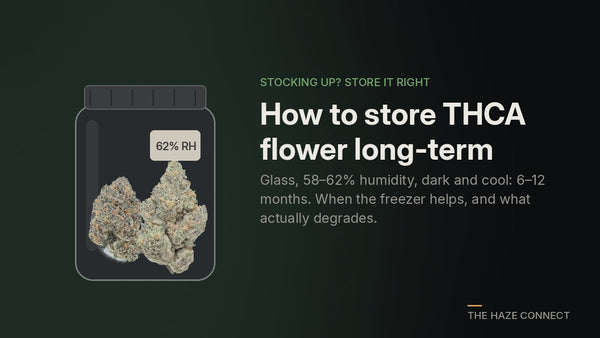
Store THCA flower in an airtight glass container (such as a mason jar) in a cool, dark place. Avoid heat, moisture, direct sunlight, and excessive air exposure, all of which can degrade cannabinoids and terpenes over time. Properly stored, THCA flower maintains its potency and freshness for several months.
Related Articles
THCA vs THC: Key Differences in Effects, Legality & More
Is THCA Legal? 2026 State-by-State Guide
Buy THCA Flower Online, Dispensary-Grade, Shipped to Your Door
Ready to try premium THCA flower? Shop our dispensary-grade strains and get free shipping on orders over $99. Every order is backed by third-party lab testing, discreet packaging, and fast delivery.