Updated November 13, 2026. A federal judge hears the industry's request for a temporary restraining order on November 19. We will update this page after the hearing.
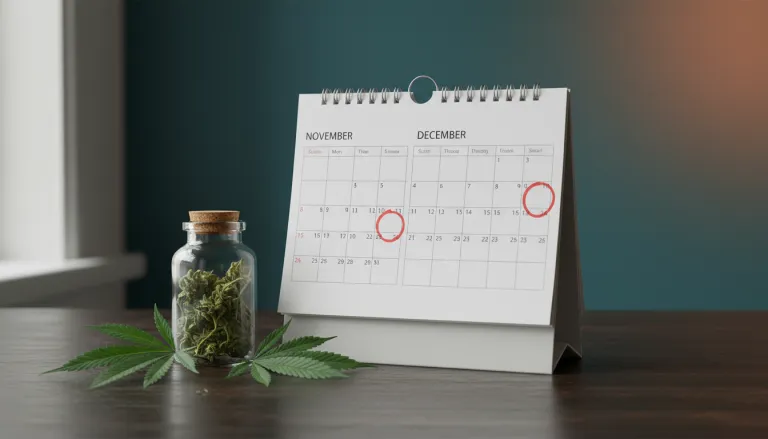
Illinois' hemp THC ban took effect on November 12, 2026. From that day, hemp products with more than 0.4 mg of total THC per container count as cannabis in Illinois, and only licensed dispensaries can sell them. But roughly 250 businesses are still selling, because the state agreed not to enforce the law against them until a federal judge hears their lawsuit on November 19. Here is what the Illinois Hemp Act bans, what the "TRO" actually is, who is and is not covered, and what could happen next.
Key takeaways
- The Illinois Hemp Act is in effect statewide as of November 12, 2026. Illinois did not follow the federal delay to December 11.
- There is no court-ordered TRO yet. The state agreed in a joint court filing not to enforce the law against the six plaintiffs and members of the Illinois Healthy Alternatives Association (ILHAA) until November 19. Some reports called this a court order. It is an agreement.
- Everyone else must comply now. The pause does not suspend the law for businesses outside the lawsuit.
- The hearing is November 19 before U.S. District Judge Martha M. Pacold in Chicago, with 20 minutes per side. The case is Illinois Healthy Alternatives Association et al. v. Raoul et al., No. 1:26-cv-13799 (N.D. Ill.).
- The industry's main argument is the Commerce Clause. Recent hemp cases in other states have mostly gone the states' way, and the federal ban that starts December 11 complicates the argument.
What the Illinois Hemp Act bans as of November 12
Governor JB Pritzker signed SB 3222 on June 12, 2026, creating the Illinois Hemp Act (Public Act 104-0463). The 21+ age limit took effect right away. The rest took effect on November 12, 2026, when the old Industrial Hemp Act was repealed. According to the Illinois Department of Revenue (IDOR) and the Illinois Department of Agriculture (IDOA), a product can be sold to consumers as hemp in Illinois only if it:
- Contains no more than 0.4 mg of total THC per container, counting THCA and any cannabinoid with similar effects, including delta-8, THC-P, HHC and THC-O.
- Contains no synthetic cannabinoids and no naturally occurring cannabinoids synthesized outside the plant.
- Is not intended to be smoked or vaped. IDOR's compliance alert says retailers can no longer sell vapes containing hemp in Illinois.
- Contains no alcohol, tobacco or nicotine, and uses only ingredients the FDA recognizes as safe.
- Is prepackaged, lab tested by an IDOA-approved lab, labeled with a QR code to its certificate of analysis, and sold in child-resistant packaging.
Anything over the line is cannabis under the Cannabis Regulation and Tax Act. Only IDOA-licensed cultivators may grow it and only dispensaries licensed by the Illinois Department of Financial and Professional Regulation may sell it. Selling it without a license can bring product seizure, tax, penalties and criminal charges. Businesses that make hemp products also need a new IDOA Hemp Product Manufacturer license, which costs $5,000 for two years.
In practice, that wipes out most of what gas stations, smoke shops, bars and grocery stores were selling: THC seltzers and sodas, delta-9 and delta-8 gummies, THCA flower and pre-rolls, and hemp vapes. The United Center, for example, said it would stop offering hemp THC beverages as of November 12. Low-THC CBD products that meet every requirement can still be sold outside dispensaries.
For the full background on the law, see our Illinois Hemp Act guide.
Illinois did not wait for the federal date
Congress moved most of the federal hemp redefinition from November 12 to December 11, 2026. Illinois chose not to follow. IDOR's October bulletin is direct: the state planned to enforce the Illinois Hemp Act on November 12 "regardless of the federal government's delay." The bulletin also notes some products may still be sold outside Illinois until December 11, depending on the state. So for about four weeks, Illinois is stricter than federal law. For the federal side, including which cannabinoids lost hemp status on November 12, see our explainer on the federal THC-P and synthetic cannabinoid ban.
The lawsuit: who sued and what they want
On November 5, 2026, the Illinois Healthy Alternatives Association and five hemp businesses sued Illinois Attorney General Kwame Raoul and five other state officials in federal court in Chicago. They filed an emergency motion for a temporary restraining order (TRO) and a preliminary injunction, plus a complaint for declaratory and injunctive relief. Michael Rothstein and Nate Goodman of Tabet DiVito & Rothstein represent the plaintiffs.
ILHAA says it represents about 250 companies in Illinois' hemp industry that employ more than 5,000 people. Named plaintiffs include Life Element, which does business as CBD Botanicals in Springfield, and MNG 2005, which runs 14 Illinois stores under the CBD Kratom brand.
The core claim is that the Hemp Act violates the U.S. Constitution's Commerce Clause. The filing argues the law will "slam shut access to Illinois markets" for out-of-state companies that make and sell federally legal hemp products, and will wipe out thousands of Illinois farmers, infusers, distributors and retailers. According to reporting on the filing, the plaintiffs want the court to block:
- The reclassification of over-limit hemp products as cannabis.
- The 0.4 mg total THC per container limit.
- The requirement that these businesses hold cannabis licenses.
- Provisions that restrict products made outside Illinois.
The industry estimates Illinois hemp sales topped $500 million in 2025 and generate more than $30 million a year in state revenue. A separate 2025 Whitney Economics report, cited by WTTW, put total hemp-related revenue in Illinois above $2.7 billion. The two numbers measure different things, so they do not conflict.
Is there a TRO? What the "pause" actually covers
This is where a lot of the coverage has been confused. As of November 13, Judge Pacold has not granted a TRO. What happened instead:
- In a joint filing on Friday, November 6, the Attorney General and the other state defendants agreed "not to undertake any enforcement action" under the Hemp Act against the plaintiffs or ILHAA members until November 19. The pause covers members on a list sent to the state as of November 6, so businesses that join later are not covered.
- The court set oral argument on the TRO and preliminary injunction motion for November 19, with 20 minutes per side.
- The Chicago Sun-Times reported that at least one member store was told it can keep selling hemp THC beverages until at least 5 p.m. on November 19.
The pause protects only the six plaintiffs and ILHAA members. The Marijuana Herald summarized it plainly: the agreement does not suspend the law statewide, and businesses outside it remain subject to the November 12 requirements. If a store near you is still selling THC drinks, it may be an ILHAA member, or it may simply be out of compliance.
What could happen on November 19
- The judge grants a TRO or preliminary injunction. Enforcement of some or all of the challenged provisions would be blocked, but probably only for the parties. In Ohio, federal judges limited hemp injunctions to the named companies, and the Sixth Circuit later partly stayed even those. An Illinois order could be narrower than the headlines suggest.
- The judge denies the motion. The state's agreement expires and it could begin enforcing against ILHAA members too. The lawsuit itself would continue, but the businesses would have to comply in the meantime.
- The judge takes it under advisement. A ruling could come days or weeks later. Whether enforcement stays paused in the meantime would depend on whether the state agrees to extend its stipulation.
We are not predicting the outcome. But the track record of similar cases is worth knowing.
How similar hemp lawsuits have gone
- Virginia: In Northern Virginia Hemp & Agriculture v. Virginia (January 2025), the Fourth Circuit upheld Virginia's total THC law against preemption and dormant Commerce Clause challenges. States cite it often.
- Texas: In August 2026, U.S. District Judge Jeffrey Brown in Galveston denied a TRO against Texas' hemp rules, finding the plaintiffs had not shown irreparable harm. Their preliminary injunction request is still pending. See our Texas hemp lawsuit tracker.
- Ohio: Plaintiffs won injunctions against parts of SB 56, but only for themselves, and the Sixth Circuit partly stayed those orders in September 2026. See our Ohio hemp law explainer.
- Missouri: On November 4, U.S. District Judge M. Douglas Harpool dismissed the industry's federal challenge to HB 2641, concluding the law had not yet taken effect and its application to the plaintiffs was uncertain. The law took effect November 12, and the Missouri Attorney General has already sued retailers under it.
There is also a timing problem. The Commerce Clause argument leans on these products being federally legal hemp. On December 11, 2026, most of them will not be, because the federal 0.4 mg per container cap takes effect. Even a win on November 19 may buy weeks, not years, unless Congress changes the federal law.
Timeline
| Date | What happened |
|---|---|
| February 13, 2026 | Chicago Mayor Brandon Johnson vetoes a city hemp THC ban. |
| June 12, 2026 | Pritzker signs SB 3222 (Public Act 104-0463). 21+ age limit starts immediately. |
| October 2026 | IDOR Bulletin FY 2027-04 confirms Illinois will enforce on November 12 regardless of the federal delay. |
| November 5, 2026 | ILHAA and five businesses sue and file an emergency TRO motion. |
| November 6, 2026 | State agrees not to enforce against plaintiffs and ILHAA members until November 19. |
| November 12, 2026 | Illinois Hemp Act takes effect. Federal ban on cannabinoids the plant cannot make takes effect. |
| November 19, 2026 | TRO and preliminary injunction hearing before Judge Pacold. |
| December 11, 2026 | Federal total THC rule and 0.4 mg per container cap take effect nationwide. |
What this means if you buy hemp THC in Illinois
- THC drinks, gummies and edibles over 0.4 mg per container: dispensary only, except at stores covered by the temporary pause.
- Delta-8, THC-P, HHC and THC-O: versions made outside the plant are not allowed in consumer hemp products, and any natural traces count toward the 0.4 mg limit.
- THCA flower, pre-rolls and hemp vapes: smokable and vapeable products do not qualify as consumer hemp products under the Act.
- Dispensary prices will be higher. The Sun-Times, citing state revenue figures, reports cannabis excise taxes in Chicago run roughly 22% to 37% depending on potency.
- Online orders: IDOR's bulletin does not address mail order directly, but it says products sold to Illinois consumers must meet Illinois requirements. Treat an over-limit product shipped to an Illinois address as cannabis under state law. Our Illinois legality page has the current state rules.
For neighboring states, see our Midwest hemp law map.
FAQ
Is the Illinois hemp ban in effect?
Yes. The Illinois Hemp Act took effect statewide on November 12, 2026. The only exception is a temporary agreement not to enforce it against the plaintiffs and ILHAA members until a November 19 court hearing.
Did a judge issue a TRO against the Illinois Hemp Act?
Not as of November 13, 2026. The state agreed to pause enforcement against the businesses in the lawsuit. The judge will hear arguments on the TRO and preliminary injunction on November 19.
Which businesses are exempt from the Illinois hemp ban?
Only the six plaintiffs in Illinois Healthy Alternatives Association v. Raoul and members of ILHAA, about 250 companies, and only until November 19 unless the court or the state extends it.
Is delta-8 legal in Illinois?
No, not as a hemp product. Since November 12, 2026, consumer hemp products in Illinois cannot contain cannabinoids synthesized outside the plant, and delta-8 counts toward the 0.4 mg per container limit.
Is THCA flower legal in Illinois?
Not as hemp. Illinois now measures total THC, including THCA, and consumer hemp products cannot be intended for smoking or vaping. Cannabis flower remains legal for adults through licensed dispensaries.
Are THC drinks banned in Illinois?
Hemp THC drinks with more than 0.4 mg of total THC per container can no longer be sold at bars, restaurants, liquor stores or grocery stores, except by businesses covered by the temporary pause. They can still be sold in licensed dispensaries.
Does the federal delay to December 11 change the Illinois date?
No. Illinois set November 12 in state law, and IDOR said the state would enforce on that date regardless of the federal delay.
Is CBD still legal in Illinois?
Yes, if the product has no more than 0.4 mg of total THC per container and meets the Act's testing, labeling, packaging and ingredient rules. Full-spectrum CBD products above that THC level are now treated as cannabis.
When will we know the outcome?
The hearing is November 19, 2026. The judge could rule from the bench or later. We will update this page when there is a ruling.
Sources
- The Marijuana Herald: Illinois agrees to pause hemp THC enforcement for 250 businesses until November 19
- Chicago Sun-Times: How Chicago businesses are bracing for the state's hemp ban (Nov 7, 2026)
- Chicago Sun-Times: Illinois hemp ban delayed, but only for some businesses (Nov 10, 2026)
- Block Club Chicago: Illinois delays hemp THC ban for 250 businesses that sued over it
- Cannabis Business Times: ILHAA and hemp businesses sue to stop state's new law
- Illinois Department of Revenue, Bulletin FY 2027-04: Hemp Product Changes, Effective November 12, 2026
- Illinois Department of Revenue, Compliance Alert CA 2026-02: Vapes containing hemp
- Illinois Department of Agriculture, Informational Bulletin IB-2026-06: Illinois Hemp Act Overview
- WTTW: Illinois Hemp Act set to ban some THC drinks
- KY3: Missouri AG sues retailers, defeats federal court challenge to HB 2641 (Nov 4, 2026)
- WAND: Illinois hemp businesses ask court to block new law
This article is for general information and is not legal advice. Hemp laws are changing quickly. Check current federal and state law before you buy, and talk to a lawyer about your specific situation. Adults 21+ only.