Last updated: September 15, 2026
Quick answer: There are now two federal dates, and which one applies depends on what is in the product. On December 11, 2026, Section 781 of P.L. 119-37 changes the federal definition of hemp to a total-THC standard that counts THCA, and caps finished consumable hemp products at 0.4 mg of total THC per container. That covers THCA flower, pre-rolls, live resin vapes, concentrates and hemp Delta-9 gummies. On November 12, 2026, the original statutory date, synthetic and chemically converted cannabinoids such as Delta-8, HHC, THC-O and THCP lose federal hemp status; the September 2 delay (H.R. 6500) did not extend them. State deadlines are separate and none of them moved: Texas's ban has been in force since July 31, Illinois's Hemp Act takes effect November 12, and Ohio's SB 56 restrictions are already live. Below is what each date means in every state.
Which date applies to which products?
| Product | Federal date | What changes |
|---|---|---|
| THCA flower, pre-rolls, hash holes, smalls | December 11, 2026 | Total-THC standard (Delta-9 + 0.877 x THCA) capped at 0.3% by dry weight; high-THCA flower no longer qualifies as hemp. |
| Live resin THCA vapes and carts | December 11, 2026 | Same total-THC standard plus the 0.4 mg per-container cap. |
| THCA concentrates (badder, rosin, diamonds, hash) | December 11, 2026 | Same total-THC standard plus the 0.4 mg per-container cap. |
| Hemp Delta-9 gummies and drinks | December 11, 2026 | 0.4 mg total THC per container; a 10 mg gummy is 25 times the new limit. |
| Delta-8, HHC, THC-O, THCP and other converted cannabinoids | November 12, 2026 | Lose federal hemp status outright; the December delay does not cover them. |
| CBD, CBG and other non-intoxicating cannabinoids | December 11, 2026 | Remain hemp if the finished product stays under 0.4 mg total THC per container. |
Not sure which bucket a product falls in? Check the COA. If the cannabinoid on the certificate is THCA, Delta-9 or CBD, the December 11 date applies. If it is Delta-8, HHC, THC-O, THCP or a "blend," November 12 applies. Our COA guide shows where to look.
What Section 781 Actually Does
The 2018 Farm Bill defined hemp using a Delta-9-only measurement: Cannabis sativa L. containing 0.3% or less Delta-9 THC by dry weight. THCA, the non-intoxicating precursor that converts to Delta-9 under heat, was not counted, which is how high-THCA flower came to be sold as federally legal hemp despite producing strong effects when smoked or vaporized.
Section 781 of the Continuing Appropriations and Extensions Act, 2026 (P.L. 119-37) changes three things at once:
- Total-THC measurement. Hemp must contain no more than 0.3% total THC by dry weight, where total THC = Delta-9 + (THCA x 0.877). This brings THCA into the legal calculation.
- 0.4 mg per-container cap on finished consumable hemp products. Most current edibles, vapes and concentrates would need to reformulate or exit.
- Synthetic and converted cannabinoids excluded. Delta-8 THC, HHC, THC-O and chemically converted cannabinoids fall outside the new definition.
How the deadline moved from November 12 to December 11
Section 781 set a statutory effective date of November 12, 2026, one year after P.L. 119-37 was signed. On August 8, 2026 the Senate tabled Senator Budd's amendment to keep that date (61-32) and passed a continuing resolution (90-6) that pushes the effective date for naturally derived hemp cannabinoids to December 11, 2026. The House passed the measure 370-48 on September 1, and President Trump signed H.R. 6500 into law on September 2, 2026. The delay language covers naturally occurring cannabinoids only, so the November 12 date still stands for synthetic and converted ones.
Whether Congress moves the date again is an open question; our will the hemp ban be delayed again post tracks the live proposals. For how the delay passed, see what the Senate actually did and what changed when it was signed. For the underlying law, see our federal hemp law 2026 explainer.
Three Categories of State Impact
Every U.S. state falls into one of three categories based on how the federal change interacts with existing state law. The federal dates above apply everywhere; the state dates listed below apply on top of them and do not move.
Category 1: States with their own restrictions already in force or scheduled
These states already apply total-THC measurement, per-serving caps, smokable-hemp restrictions or outright bans at the state level, so the federal change largely codifies what the state has already done. Where a state has its own date, that date controls in-state regardless of December 11.
- Texas: The most restrictive of this group. DSHS's total-THC rules took effect March 31, 2026 and, after a brief injunction, have been enforced since June 5; Delta-8 and other converted cannabinoids became Schedule I on July 31, 2026. Three lawsuits are pending. For Texas the state deadline has already passed regardless of federal timing. See the Texas lawsuit tracker and our Texas shipping guide.
- Illinois: The Illinois Hemp Act (SB 3222) takes effect November 12, 2026, a month ahead of the federal date. See our Illinois Hemp Act guide.
- Ohio: SB 56 restricts intoxicating hemp at the state level; we no longer ship THCA flower, pre-rolls, vapes or concentrates to Ohio. See our Ohio SB 56 guide.
- Virginia: SB 903 applies a total-THC standard with a 2 mg per-package cap. See our Virginia guide.
- Colorado: SB 22-205 caps finished hemp at 1.75 mg per product. See our Colorado guide.
- New Jersey: S4509 banned intoxicating hemp at retail in January 2026. See our New Jersey guide.
- California: AB 8 (Jan 1, 2026) restricts THCA to licensed dispensaries. See our California guide.
- Oregon: OLCC total-THC standard. See our Oregon guide.
- Washington: Smokable hemp restrictions in place. See our Washington guide.
- Connecticut: Total-THC standard. See our Connecticut guide.
- Massachusetts, Minnesota, Maine, Vermont: Per-serving caps and total-THC frameworks. See the state guides linked from our state hub.
- Mississippi: Total-THC enforcement plus the 2025 AG opinion. See our Mississippi guide.
- Louisiana, Kentucky, Utah, Alabama, Montana: Various smokable-hemp or cap-based restrictions; see the state hub.
Category 2: States that simply follow the federal definition
These states follow the federal Delta-9-only standard and have not enacted significant additional restrictions. They see the largest practical change on December 11, because the federal definition is the only one in play and it changes overnight:
- Florida: Federal alignment; a 2026 court ruling on THCA is covered in our Florida guide.
- North Carolina: Federal alignment. See our North Carolina guide.
- South Carolina: Federal alignment. See our South Carolina guide.
- Pennsylvania: Federal alignment. See our Pennsylvania guide.
- New York: See our New York guide.
- Wisconsin, Missouri, Oklahoma, Georgia, Nebraska, New Mexico: Federal alignment. See the state guides linked from our state hub.
- Indiana: Federal alignment.
- Michigan: Federal alignment, with the adult-use cannabis program operating separately.
For consumers in these states, December 11 is the date that matters: products widely available at hemp retailers and online today will need to reformulate or leave the market, and the window to stock up closes then.
Category 3: States that already prohibit THCA at the state level
These states have explicit state-level prohibitions on THCA or intoxicating hemp that exist independently of federal law. Neither federal date changes their framework, which is already restrictive:
- Idaho: Zero-tolerance THC policy.
- Tennessee: HB 1376 (Jan 2026) prohibits online hemp delivery.
- Arkansas: Act 629 (2023) intoxicating hemp ban.
- Kansas: Bans all THC isomers.
- Rhode Island: THCA classified as a controlled substance.
- South Dakota: Restrictive hemp framework.
- Iowa, Alaska, Delaware, New Hampshire, North Dakota: Various prohibitions.
- Hawaii: Restrictive enforcement environment.
What the industry is still trying to change
- Another delay or a rewrite. The Hemp Planting Predictability Act (H.R. 7024 / S. 3686), the American Hemp Protection Act (H.R. 6209), the Lawful Hemp Protection Act (H.R. 9830) and H.R. 7010 would each push the date further or replace the 0.4 mg cap. All remain in committee. Odds and timing: will the hemp ban be delayed again.
- Litigation. The Texas cases are the first real test of whether a state can schedule federally compliant hemp and whether interstate hemp commerce is protected; see the tracker.
- Open regulatory questions. The FDA has not published the cannabinoid list or defined "container," both of which decide how much of the market can reformulate rather than exit.
The planning baseline is December 11 for THCA and hemp Delta-9, November 12 for converted cannabinoids. Treat any further delay as upside, not as a plan.
What consumers can do before the deadline
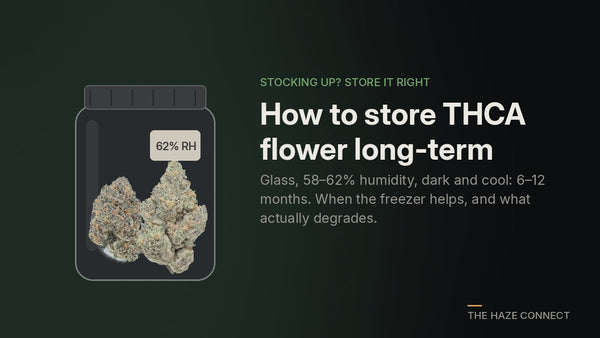
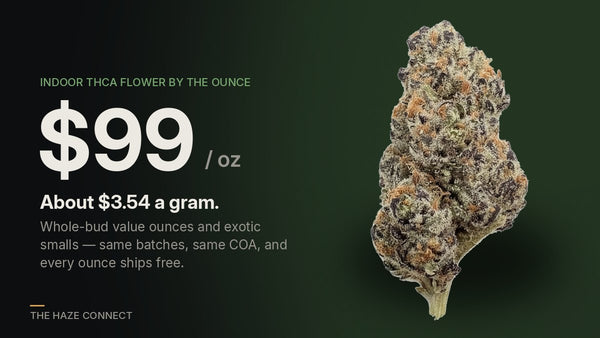
- Stock up on what you actually use. Flower, gummies and concentrates keep well when stored properly; our storage guide covers how long, and the $99 ounce guide covers how much.
- Save COAs. Document compliance at the time of purchase.
- Know which date is yours. Check your state above, then check the cannabinoid on the COA. If you are in Illinois, or buying Delta-8 or HHC anywhere, your date is November 12. Otherwise it is December 11.
- Follow the bills. We update this page and the delay tracker as anything moves.
Frequently Asked Questions
What is Section 781 of P.L. 119-37?
Section 781 of the Continuing Appropriations and Extensions Act, 2026 redefines hemp at the federal level using a total-THC standard (Delta-9 + 0.877 x THCA) capped at 0.3% by dry weight, and caps finished consumable hemp products at 0.4 mg of total THC per container. Its original effective date was November 12, 2026; H.R. 6500, signed September 2, 2026, moved the date to December 11, 2026 for naturally occurring cannabinoids.
Has the November 12, 2026 hemp deadline been delayed?
Partly. For naturally derived cannabinoids such as THCA, hemp Delta-9 and CBD, the deadline is now December 11, 2026 under H.R. 6500, signed into law September 2, 2026. For synthetic and chemically converted cannabinoids such as Delta-8, HHC and THC-O, November 12, 2026 still applies. State deadlines, including Illinois's November 12 Hemp Act date and Texas's July 31 ban, did not move.
Is the hemp deadline November 12 or December 11?
Both. November 12 for converted cannabinoids like Delta-8 and HHC, and for Illinois under its own state law. December 11 for THCA flower, live resin vapes, concentrates, hemp Delta-9 gummies and CBD everywhere else.
Will federal Section 10114 interstate commerce protection still apply?
Section 10114 protects shipment of hemp produced in accordance with federal law. When the federal definition of hemp narrows on December 11, products that no longer meet the new definition lose federal interstate commerce protection.
Which states are least affected?
States that already apply total-THC standards or per-serving caps (Colorado, Virginia, New Jersey, California, Oregon, and others) see moderate practical change because their state frameworks already align with the new federal standard. Texas is a special case: its own ban took effect before any federal change.
Which states are most affected?
States that follow the federal Delta-9-only definition without additional restrictions (Florida, North Carolina, South Carolina, Pennsylvania, Wisconsin, Missouri, Oklahoma, Georgia, Michigan, New Mexico, Nebraska, Indiana) see the biggest change on December 11, because the federal definition is the only one in play.
What happens to existing inventory after the deadline?
Products that no longer meet the federal definition lose federal hemp status on their applicable date. The statute has no grandfather clause for consumer possession, and state-level handling will vary.
Disclaimer: This article reflects The Haze Connect's understanding of federal and state hemp law as of September 15, 2026. Hemp law is changing rapidly and this page is updated as it does. The Haze Connect does not provide legal advice.
Stock up while the window is open: THCA flower · $99 ounces · pre-rolls · vapes · concentrates · Delta-9 gummies. Every batch with a published COA. Free shipping on orders $99+.
Sources
Primary sources used for the legal status described above. Statutes and agency pages are authoritative; verify current text before relying on it.
- Public Law 119-37, Continuing Appropriations and Extensions Act, 2026, with Section 781 hemp redefinition (govinfo)
- Public Law 119-37 full text (govinfo)
- H.R. 6500 enrolled bill text (govinfo)
- 7 U.S.C. 1639o hemp definition (Cornell LII)
- Hemp ban delay passes Congress, heads to Trump's desk, Sept 2, 2026 (Marijuana Moment)